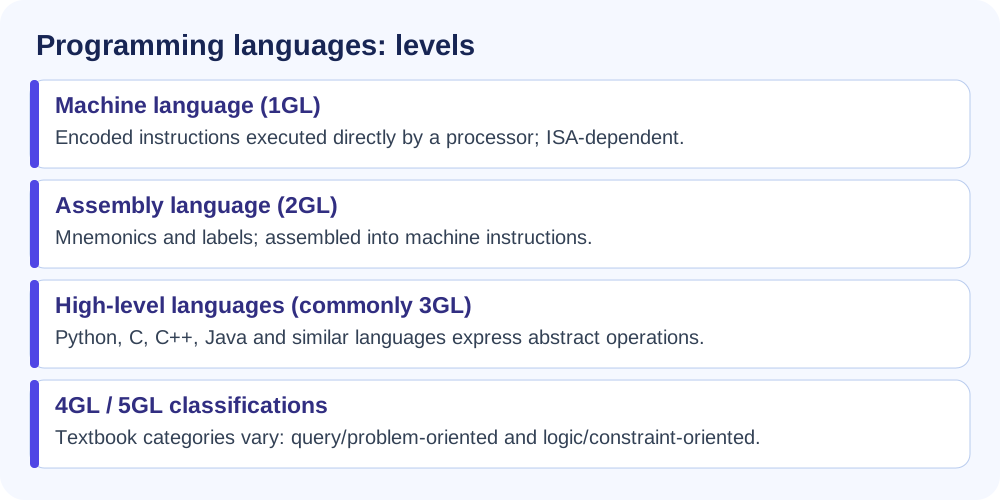
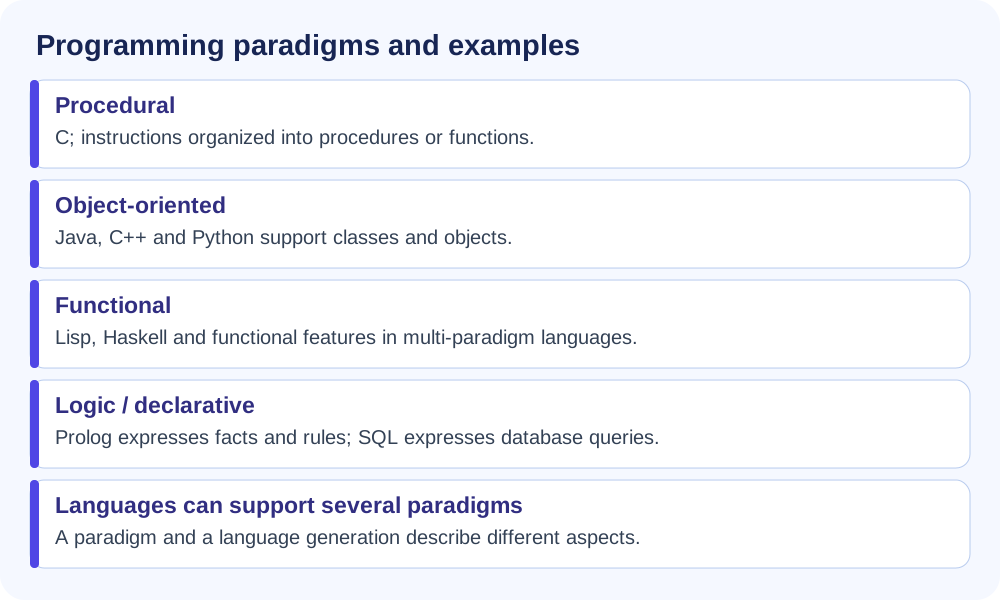
What is a Programming Language? / प्रोग्रामिंग भाषा क्या है?
  • A Programming Language is a formal language used to write instructions that a computer can understand and execute.
  • प्रोग्रामिंग भाषा एक औपचारिक भाषा है जिसके माध्यम से कंप्यूटर को निर्देश दिए जाते हैं।
Low Level LanguageMachine hardware के निकट
High Level LanguageHuman thinking/language के निकट
Source visual: classification, machine-vs-assembly table and high-level characteristics
Classification Snapshot

Low Level Language (LLL)

Machine Language (1GL) + Assembly Language (2GL)
Fast, machine-dependent, difficult to learn.

High Level Language (HLL)

Human thinking/language के करीब; machine-independent, easy coding & debugging, portable; source notes it is slower than LLL.
⚡ CORE MEMORY
1GL = Machine • 2GL = Assembly • 3GL = High Level • 4GL = Very High Level • 5GL = AI / Logic Based
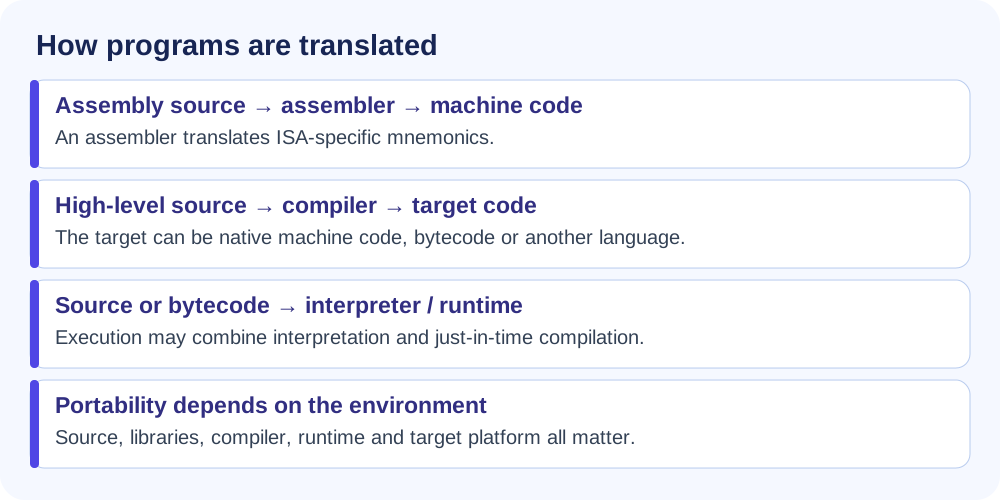
Low Level Language (LLL) / निम्न स्तरीय भाषा
  • Machine hardware के बहुत नज़दीक और humans के लिए कठिन.
  • Very fast execution.
  • Machine dependent.
  • Difficult to learn.
Machine Language (1GL)Assembly Language (2GL)
High Level Language (HLL) / उच्च स्तरीय भाषा
  • Languages close to human thinking & language.
  • Machine independent.
  • Easy coding & debugging.
  • Portable.
  • Source comparison: slower than LLL.
Machine Language vs Assembly Language
Basis / आधारMachine Language (1GL)Assembly Language (2GL)
LanguageBinary (0,1)Mnemonics
TranslatorNot requiredAssembler
Ease of useVery difficultComparatively easier
SpeedFastestVery fast
PortabilityNot portableNot portable
⚠ EXAM TRAP
Assembler translates Assembly Language; the source explicitly says Machine Language needs no translator.
First Generation Language (1GL) — Machine Language

Concept

Binary 0 & 1 only
Direct CPU execution

Advantages

Fastest
No translator required

Disadvantages

Impossible/difficult for humans
Error-prone
Source Example
101010101100
Second Generation Language (2GL) — Assembly Language

Concept

Symbolic instructions such as ADD, SUB
Needs Assembler

Advantages

Easier than 1GL
Faster than HLL

Disadvantages

Machine dependent
Still complex
Source visual: 1GL and 2GL concepts, advantages/disadvantages, plus start of 3GL
Third Generation Language (3GL) / उच्च स्तरीय भाषा
  • English-like syntax.
  • Structured programming.
  • Key features: loops, functions, conditions.
  • Compiler / Interpreter required.
3GL Examples & Real-Life Use

Examples in source

CC++JavaPythonCOBOLFORTRAN

Real-Life Use

Software development
Web, desktop and system programs
Extended 3GL list on source summary page
BASIC • Pascal • Ada • Ruby • Swift are also listed with 3GL examples in the PDF summary.
⚠ EXAM TRAP
Source one-line summary: 3GL = Human-friendly programming languages.
Fourth Generation Language (4GL) / बहुत उच्च स्तरीय भाषा

Concept

Non-procedural
Focus on WHAT, not HOW

Advantages

Less code
High productivity

Usage

Database queries
Data analysis
SQLMATLABSASR
Fifth Generation Language (5GL) / बुद्धिमान भाषा (AI Based)

Concept

Logic, facts, constraints
Used in Artificial Intelligence

Features

Problem-solving approach
Minimal coding

Usage

Expert systems
Robotics
AI research
PROLOGLISP
Source visual: 3GL features/use and complete 4GL–5GL mind-map
Extended source examples
4GL summary additionally lists PL/SQL, FoxPro, Oracle Forms. 5GL summary additionally lists Mercury, OPS5.
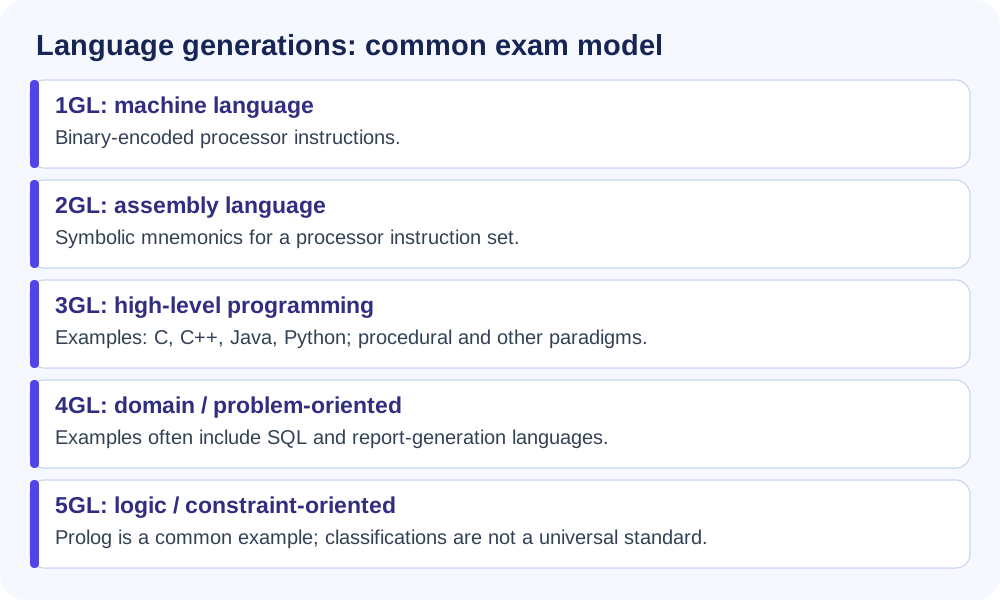
1GL → 5GL Master Comparison
GenerationLanguage LevelExamples from sourceKey Description
1GLMachine Language / मशीन भाषाBinary Code (0 & 1)Directly understood by CPU.
2GLAssembly Language / असेंबली भाषाx86, ARM AssemblyUses mnemonics such as ADD, MOV.
3GLHigh Level Language / उच्च स्तरीयC, C++, Java, Python, COBOL, FORTRAN, BASIC, Pascal, Ada, Ruby, SwiftEnglish-like, structured, portable.
4GLVery High Level Language / बहुत उच्च स्तरीयSQL, PL/SQL, MATLAB, SAS, R, FoxPro, Oracle FormsNon-procedural, less coding, WHAT-oriented.
5GLAI / Logic Based Language / कृत्रिम बुद्धिमत्ता आधारितPROLOG, LISP, Mercury, OPS5Used in AI & expert systems.
Source visual: programming-language list and generation one-line summary
⚡ GENERATION SUMMARY
1GL: Binary • 2GL: Mnemonics • 3GL: Human-friendly • 4GL: Database/report-oriented • 5GL: AI-based
Ultra-Fast Revision

1GL

Machine
0 & 1
No translator

2GL

Assembly
Mnemonics
Assembler

3GL

High Level
Human-friendly
C/Java/Python

4GL

Very High Level
WHAT not HOW
SQL/R

5GL

AI / Logic
Expert systems
PROLOG/LISP
Exam Traps
  • Machine Language = 1GL, not Assembly.
  • Assembly Language = 2GL and needs an Assembler.
  • 3GL source examples: C, C++, Java, Python, COBOL, FORTRAN.
  • 4GL is described as non-procedural and WHAT, not HOW.
  • 5GL is AI / Logic Based; source examples include PROLOG and LISP.
  • Low-level languages are source-described as machine dependent and not portable.
Chapter Boundary
Chapter 10 covers PDF pages 83–86. PDF page 87 starts the next chapter, Internet.